
 Prakash Sngh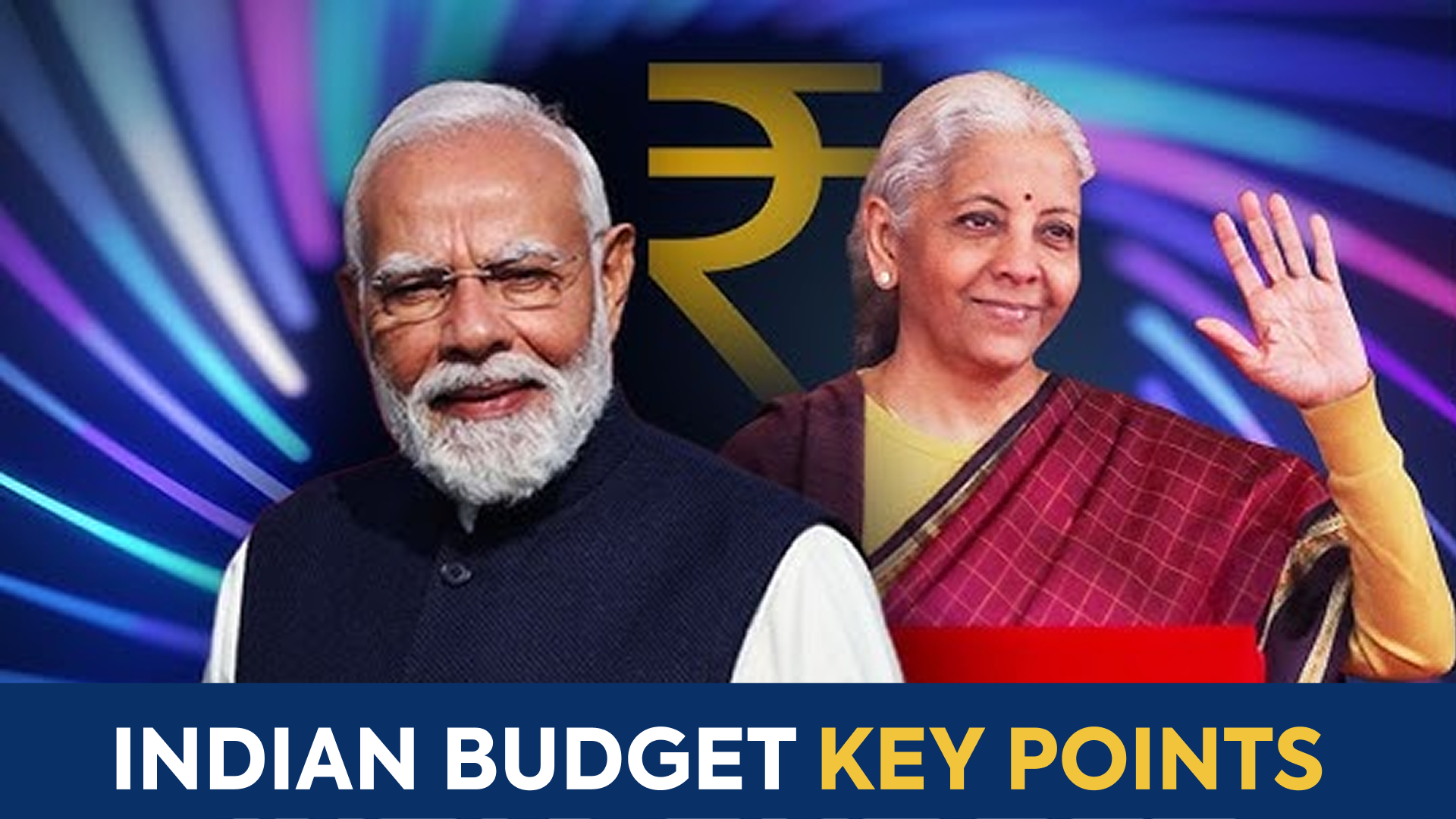
The Indian Budget 2026–27 signals a new turn in favour of inclusive growth, productivity expansion and long-term structural reforms. Tabled by Union Finance Minister Nirmala Sitharaman, this budget has focused on economic resurgence, social justice and ease of doing business – all while trying to reconcile fiscal prudence with ambitions for growth.
Based on the official Union Budget summary issued by the Economist of India, aka Ministry of Finance, this piece deconstructs what’s new in Indian Budget, Big Ideas or policy proposals and how all that is going to affect us as Indians — citizens and businesses and the wider economy.
What Is the Indian Budget 2026–27 All About?
Three cardinal Kartayvas have led India’s Budget 2026–27
- Accelerate and sustain economic growth
- Meet people’s aspirations and strengthen pools of human resources
- Make development all inclusive under ‘Sabka Saath, Sabka Vikas’
This is also the first Union Budget to be prepared at Kartavya Bhawan, reflecting a governance ethos that holds accountability and long term national interests as the guiding principles.
What’s New in the Indian Budget 2026? (Key Highlights)
1. Major Income Tax Reforms
- New Income Tax Act 2025 effective from April 2026
- Easy to understand income tax rules and forms
- Minimising (litigation) by rationalisation of penal and prosecution provisions
- Small taxpayers (Political Will Issue) One-time 6-month disclosure window for foreign assets
Why it matters: The proposed regulations are meant to provide greater certainty, lessen disputes and help encourage voluntary compliance with the rules.
2. Big Push on IT & Digital Economy
- For IT services a single category with a safe harbour margin of 15.5 %
- Threshold limit of safe harbour for IT services up from ₹250 crore to ₹300 crore
- Foreign cloud service providers given tax holiday until 2047
Impact: Bolstering India as a global IT and digital services destination; minimising compliance burden.
3. Manufacturing & MSME Growth Engine
- ₹10,000 crores MSME Growth Fund for future champions
- Concentrate on 7 priority manufacturing sectors
- To support textile, handicrafts, weaver and artisan sectors
- Lithium-ion cell manufacture and critical mineral processing incentives
Expert view: The budget unambiguously places MSMEs as the foundation of India’s sustained industrial growth.
4. Infrastructure & Capital Expenditure (CapEx)
- Public CapEx was augmented to ₹12.2 lakh crore for 2026–27 period
- Seven corridors of HSRL to be developed as “Growth Connectors”.
- Expansion of dedicated freight corridors
- Environmentally sustainable passenger transport systems
This sustained CapEx momentum underpins job creation and crowds-in private investment.
Indian Budget 2026 at a Glance (Key Numbers Grid)
| Category | FY 2026–27 |
| Total Expenditure | ₹49.6 lakh crore |
| Capital Expenditure | ~₹11.1 lakh crore |
| Fiscal Deficit | 4.3% of GDP |
| Gross Market Borrowing | ₹17.2 lakh crore |
| Non-Debt Receipts | ₹36.5 lakh crore |
| Net Tax Receipts (Centre) | ₹28.7 lakh crore |
Source: Union Budget 2026–27 Summary
Sector-Wise Key Proposals in the India Budget
Education & Skill Development
- AVGC content creator labs in 15,000 Schools & 500 Colleges
- Training of 10,000 tourist guides by the Maintenance of Heritage Tourism Sector: 12-week hybrid courses
- At least 1 girls’ hostel in each district to encourage STEM enrollment
Healthcare & Social Welfare
- Wellness centers with diagnostics and rehabilitation
- Strengthening of mental health institutions
- Sustained attention to poverty alleviation and livelihood assistance
Agriculture & Rural Development
- Bharat-Vistaar AI platform that integrates AgriStack and ICAR data
- Fishery, Dairy and Farmer-centric Technology Adoption A raise to the class of fisheries tech. for dairy and farmer-friendly technology adoption.
- Focus on productivity, income and resilience
Customs, Trade & Ease of Doing Business
Customs & Indirect Taxes
- Cut in basic customs duty on certain personal consumer goods
- Critical minerals, defence, aviation & renewable energy exempted from duty purposes
- Customs streamlined with risk-based checks and electronic clearances
Ease of Doing Business
- Customs warehousing became an operator based one
- Single window for faster movement of goods through customs, the digitized predictable and simplified system.
- Relaxed regulations for exporters, startups & MSMEs
Fiscal Discipline & Economic Outlook
Fiscal Discipline & Economic Outlook
- The fiscal deficit fell to 5.6% (FY 2023–24) from 4.3% (FY 2026–27).
- Clear route to fiscally sustainable public finances
- Balanced growth motivated fiscal consolidation
This provides confidence to investors and world markets as it also protects investment in development.
Expert Take: Why the Indian Budget 2026 Makes a Difference.
With many tax reforms and incentives for manufacturing, digital growth, social infrastructure, etc., the Indian Budget 2026 is outward looking. It marries policy continuity with technological embrace and is an inclusive development, bolstering India’s aspiration to be a robust, high-growth economy.
Read More :T20 World Cup Warm-up Matches Begin 2026
Final Thoughts.
The India Budget 2026–27 is not just some figures, it’s the roadmap for the next stage of India’s economic journey. This Budget, with the praiseworthy proclivity to unwind taxes, bullet hard CapEx and MSME support and digital-first governance makes it clear that people matter and is emphasised through an emphasis on sustainable growth.”
We’ll bring soon, more detailed sector by sector analysis and expert reactions as the proposals emerge.