
 Prakash Sngh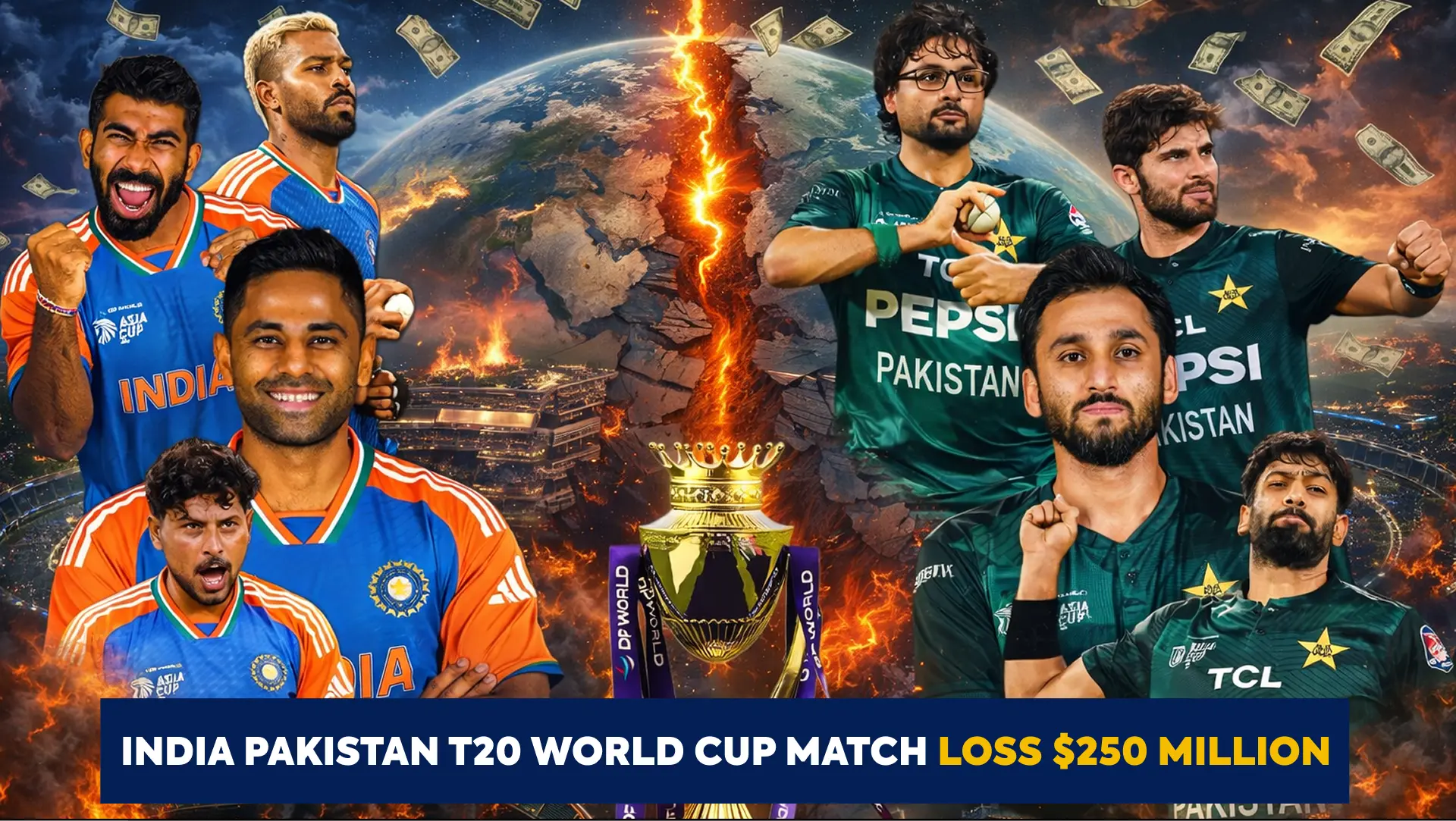
There are cricket matches and then there is India vs Pakistan. No India vs Pakistan T20 World Cup clash in 2026 is not just an emotional loss for fans — it’s a financial fault line that runs deep through boardrooms, broadcast studios and sponsor offices around the globe. Industry estimates have now put potential losses as high as USD 250 million at risk due to the non-fulfilment of this single game – an amount that gives some idea just how integral this rivalry is to the business side of the T20 World Cup.
This isn’t “good ole days” wistful thinking. It’s math, and it rests on viewership figures, ad rates, sponsor guarantees and rights fees that have been vetted enough times over the last decade to withstand a beating.
Why a Single Match Is More Than an Entire Group Stage
The India vs Pakistan T20 World Cup fixture is no ordinary match. It is the financial rock of this tournament. Broadcaster’s prime-time schedules are arranged, sponsors pay top dollar to be seen in it and moody digital platforms mark increases in traffic unrivalled by any other sporting show except the global football finals.
This one match would make four to five times the sum an average T20 World Cup game does, media rights analysts have told me. Whenever that match goes away, there is an immediate and structural shortfall.
Deconstructing The USD 250 Million Impact
To understand the scope of potential losses, it’s useful to consider where that money actually comes from. The chart below depicts the main bifurcations of revenues around the revenue model for a India vs Pakistan match not being played:
| Revenue Stream | Estimated Impact |
| Global TV advertising | Major loss due to lower ad premiums |
| Broadcast viewership | Sharp decline in peak ratings |
| Sponsorship activation | Reduced brand visibility |
| Digital streaming & ads | Drop in concurrent users |
| Merchandise & licensing | Lower sales during marquee clash |
This is no marginal decline for the International Cricket Council. The ICC designs long-term commercial deals based on them assuming the India vs Pakistan T20 World Cup match. When that assumption proves wrong, renegotiations ensue — frequently at a price.
Broadcasters Feel the First Shock
Television networks and streaming platforms are the first to fall. Advertising during an India vs Pakistan match is some of the most expensive in world sport. Without knowing how many people had seen the games and their network commercials, networks would have to recalibrate pricing or refund advertisers — or eat losses.
The sports media industry executives have been blunt: no other match makes up for the loss of this rivalry. This can be contrasted to a knockout match where numbers would not exceed the guaranteed levels of increase that come with an India Pakistan match surge.
Sponsors and Brands: A Lost Global Opportunity
For companies with a global footprint, the India vs Pakistan T20 World Cup match represents a rare opportunity to simultaneously play in two gigantic, emotionally charged markets. This fixture is the focal point for campaigns that are planned months in advance.
Absence of it means sponsors miss out on much more than just impressions, they lose narrative. The storytelling that brands fights here — tension, rivalry, legacy — simply can’t be duplicated in any other bout elsewhere on the festival. This is why the projected World Cup losses have more to do than just ticket sales or broadcast figures.
Fans Pay an Invisible Price
The financial impact makes headlines, but fans have to face a quieter loss. For millions, India vs Pakistan is more than a game of cricket; it’s memory, ritual and common history. The lack of this contest leaves a vacuum in the rhythm of the tournament and dents enthusiasm for other games.
Reduced engagement ultimately hits revenue measurements and that’s where the ICC revenue impact becomes bigger each edition missed.
The Political Undercurrent No One Is Allowed to Ignore
Cricket is a never an island either. Political sentiment and diplomatic tensions tend to drive whether India and Pakistan take to the field. Those realities have again intruded into sport, in 2026, reminding organizers that commercial plans cannot entirely insulate tournaments from world politics.
The ICC will be left all too aware of some difficult questions about the shape of future tournaments. Can we keep depending on one rivalry to drive global events? Or does the sport need a broader commercial plan?
Read More: T20 World Cup Warm-Up Matches
What Happens Next
Should the T20 World Cup India vs Pakistan game stay off the board, ICC and its associates will have to accept their reverse — financially and in sporting terms. Make-do marketing pushes, alternate marquee narratives, and new sponsor structures will cushion that blow but not remove it.
The fact remains brutal: no contest can ever take the place of India vs Pakistan, however hard fought.
Final Thought
It’s all spirit and rivalry And passion – cricket talks about these a lot. But in 2026, it is also speaking the language of economics. The potential $250 million hit over the displaced India vs Pakistan contest has exposed a truth cricket had long known but rarely articulated so starkly — that other than just points some games are played out for even survival of the spectacle.
And when that game is gone, the silence is costly.