
 Prakash Sngh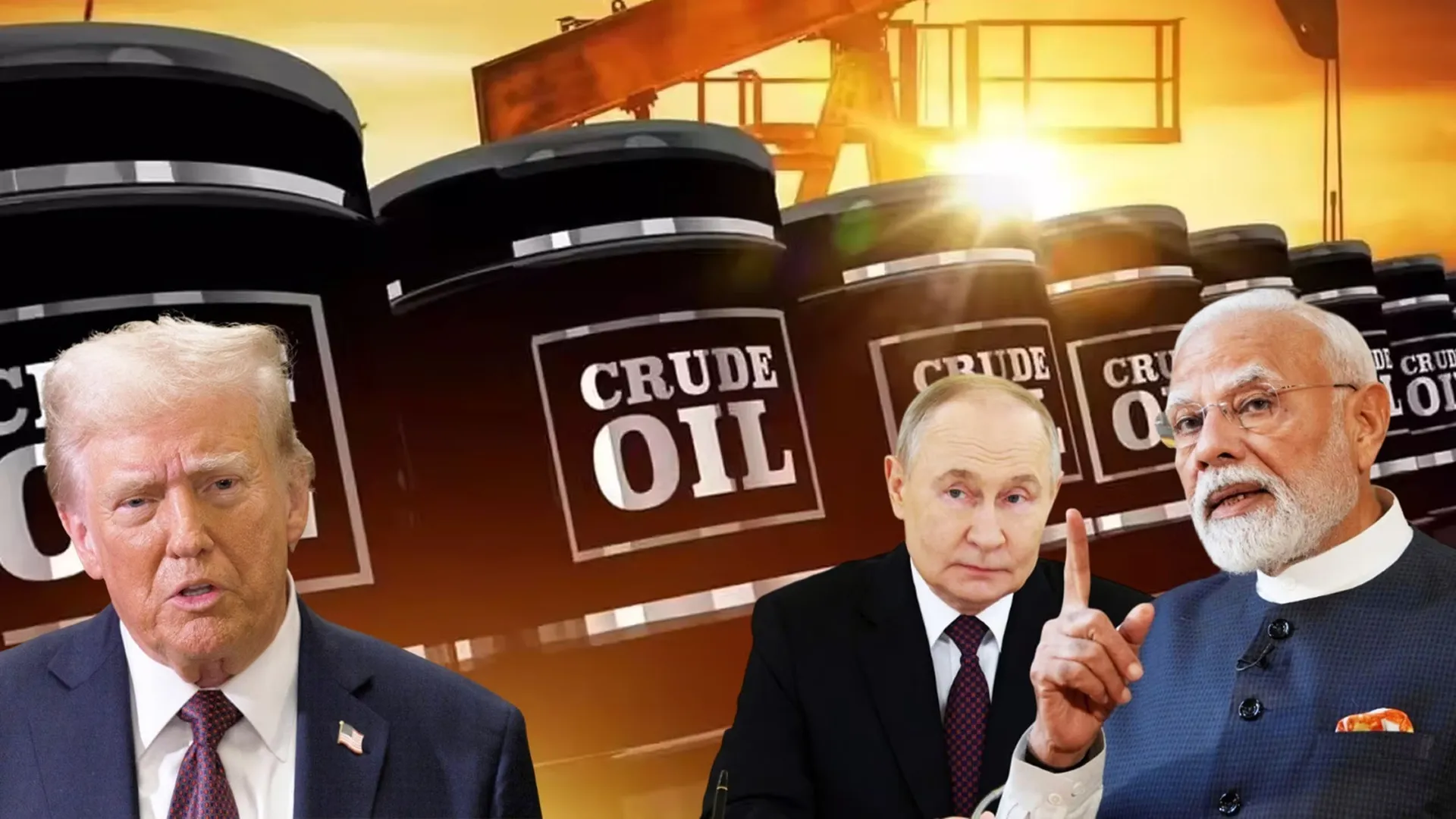
This is probably the most important news in the world of energy news today, coming out of Washington and New Delhi. It is reported that the United States has given India an extension of 30 days to purchase Russian oil.
This announcement was made on the 6th of March 2026. This decision is directly related to the escalating Middle East crisis, which has impacted oil shipping across the Strait of Hormuz.
The waiver was made public through US Treasury Secretary Scott Bessent. He claimed that the decision was made to ensure that oil flows into the world market.
He also referred to India as an important partner for America. United States.
Here’s everything you must learn about this.
The Key Facts: What Was Announced
| Detail | Information |
| Who Announced It | US Treasury Secretary Scott Bessent |
| Date of Announcement | March 6 2026 (Thursday, US local time) |
| Waiver Duration | 30 days |
| Waiver Valid Until | April 3 2026 (end of the day, US time) |
| Who Benefits | Indian refiners are buying Russian crude are already shipping it to the ocean. |
| Issued By | US Treasury Department’s Office of Foreign Assets Control (OFAC) |
| Oil Covered | Russian products, including petroleum and crude oil, were loaded onto vessels before 5 March 2026 |
| Reason Given | The Middle East conflict is disrupting the Strait of Hormuz oil supply routes |
| Indian Companies Responding | Indian Oil Corporation, Bharat Petroleum, HPCL, MRPL |
| Does It Ease Russia Sanctions Broadly | No. This is temporary and applies only |
India Russian Oil Waiver: What Did the US Treasury Secretary Actually Say
The following is the morning news that every oil trader and energy analyst is watching this morning. Scott Bessent made a clear statement.
He stated that President Trump’s energy policy has led to the highest levels of oil and gas production in U.S. history.
Then he explained why the waiver was required. He explained that it was because the Treasury Department is issuing a temporary 30-day waiver that allows Indian refiners to buy Russian oil.
He said it is an attempt to make it a short-term decision. He stated that it would not bring significant financial benefits for the Russian government since it only protects oil already in the sea and stranded.
The speech was also important to India. He declared India an important partner of and the United States.
He stated that the US will fully anticipate India to boost the amount of American crude in the coming years.
He described the waiver as an interim measure that will reduce pressures due to Iran’s conduct in the world energy market.
Read More : US Senate Clears Way for Trump to Keep Striking Iran as Tehran Fires New Missiles at Israel
Why Is This Happening Now: The Middle East Context
The War That Changed Everything
To fully comprehend this waiver, you must understand the events of February 28th 2026. In 2026, the United States and Israel launched an operation in the military that was jointly conducted against Iran.
They dubbed it Operation Epic Fury. Iranian Supreme Leader Ayatollah Khamenei died in the initial strikes.
Since then, Iran has been firing drones and missiles at targets throughout and across the Gulf region. The Strait of Hormuz, a narrow waterway between Iran and Oman, is now closed for shipping.
This is a new development that has shocked the energy market.
India Russian Oil Waver: Why the Strait of Hormuz Matters So Much
The Strait of Hormuz is one of the major straits around the globe. It is estimated that 20 per cent of worldwide oil travels through it each day. If the flow of oil through it is interrupted, prices for oil rise all over the world.
This is exactly what’s been happening.
On Thursday, oil prices jumped sharply. In the US standard oil rate, West Texas Intermediate, was up 8.51 per cent in one day to end at 81.01 USD per barrel.
This was the highest single-day increase since May 2020. The benchmark global Brent crude was also up 4.93 per cent to close at 85.41 dollars per barrel.
Why India Specifically Needs This Waiver
India’s Oil Situation Right Now
India is among the biggest oil-importing countries around the globe. India is the 3rd largest importer of oil worldwide. Also, it is the fourth-largest refiner and fifth-largest producer of petroleum-related products.
Oil is the mainstay of India’s economy in general.
India is the source of almost 40% of its imports of oil from the Middle East region. The majority of the oil flows via the Strait of Hormuz.
Since that route is now affected, India is facing a real problem with its energy supply.
India’s crude oil reserves are only able to cover about 25 days of the demand. This is a very small buffer. Therefore, any disruption in supply routes will hit India extremely fast and quickly.
India Had Already Reduced Russian Oil Purchases
It’s the trending news detail that many people are not aware of. The year 2026 was the first time India began taking a step back from the purchases it made of Russian oil. This was in response to demand from the United States.
Through a reduction in Russian oil purchases, India was also able to avoid the hefty tariffs Trump had threatened to impose.
In actual fact, the share of Russia’s total oil imports fell to less than 20 per cent in January of 2026. It marked the first occasion since the May 2022 deadline when Russia’s share dropped to a level that to a low.
India was substituting Russian oil by importing supplies coming from the Middle East, Saudi Arabia, the UAE and Iraq.
Now, with an unstable Middle East in crisis, these Middle Eastern supply routes are in danger. India is in need of a fast alternative and Russian oil that is stranded in the sea is the most efficient solution at the moment.
India Russian Oil Waver: Which Indian Companies Are Moving on This
Indian state-owned refiners of oil have acted quickly since the announcement of the waiver. This is the most recent information from the energy industry.
Four major corporations have already begun talks with traders for oil to ensure the security of Russian crude and prompt delivery.
| Indian Refiner | Type | Action Taken |
| Indian Oil Corporation (IOC) | State-owned, the largest refiner | Discussions began with traders on Russian crude |
| Bharat Petroleum (BPCL) | State-owned refiner | Discussions have been initiated to ensure the prompt delivery of cargoes |
| Hindustan Petroleum (HPCL) | State-owned refiner | Contacting traders to ensure supplies |
| Mangalore Refinery and Petrochemicals (MRPL) | State-owned refiner | We have partnered with traders to expedite the turnaround of shipping |
The four refiners in the group control a significant portion of the daily processing of oil in India.
Their quick reaction is a sign of how seriously the Indian government is handling the issue of energy supply in the present.
India Russian Oil Waiver: What This Waiver Does and Does Not Cover
What It Allows
The waiver allows Indian refiners to purchase Russian crude petroleum and petroleum products that were loaded on ships before March 5th 2026.
These are vessels that are currently in a state of limbo because of sanctions-related issues. The waiver permits this oil to be shipped for sale to Indian buyers without breaking US sanctions against Russia.
The waiver will be valid until April 3rd 2026. All transactions that involve vessels governed by various sanctions regimes are allowed during this time.
India Russian Oil Waiver: What It Does Not Allow
The US Treasury was very clear regarding the limitations of the waiver. This waiver is not an overall relaxation of sanctions against Russia. It doesn’t allow transactions that are not permitted under the current US law on sanctions.
The law also excludes all transactions that involve Iran or products or services. These are completely prohibited by the existing laws.
This is an extremely narrow and surgical procedure. It is only a single area: Russian oil already at sea, headed towards India in the present.
India’s Official Energy Security Position
Indian officials have said sources from the Indian government have stated that India is evaluating its energy security twice per day. Officials claim that India has a secure position with regard to their energy security at the present moment.
Stocks are replenished daily. There is no shortage in LPG, LNG, or crude oil so far as India is concerned.
Congress M.P. Shashi Tharoor also weighed in on this issue in the current news. Shashi Tharoor called for diplomacy as well as an agreement to settle this West Asia conflict.
He stated that India would like to see Iran let ships traverse into the Strait of Hormuz without disruption.
He also said that India’s position is tense because it has strong relations with both Gulf nations and Iran.
What Happens After 30 Days
Everyone in India’s energy industry is currently asking. The waiver expires on April 3rd 2026.
The situation after that will depend on a variety of factors.
In the first place, in the event that there is a sign that the Middle East conflict has calmed down and the Strait of Hormuz reopens fully, India may not need the waiver to be renewed.
It could return to purchasing Gulf oil using regular routes.
In the second case, if the dispute persists, India may need to discuss an extension of its waiver agreement with the US.
Since the US has stated that it considers India an important partner and has asked India to purchase more American oil over the long term, both parties are likely to continue communicating closely.
India might also take advantage of this time to accelerate talks on the possibility of a long-term trade agreement along with the US.
Both countries are in the process of negotiating a trade agreement. The purchase of energy is likely to be an integral part of this agreement.
| Scenario After April 3 | What Could Happen |
| Middle East conflict eases | India is back to Gulf oil, but the waiver is not renewed |
| The conflict continues | India seeks an extension of the waiver; the US is likely to consider |
| India-US trade deal progresses | India is set to boost the US purchasing of crude oil in the course |
| The Strait of Hormuz remains shut | The global oil market is still inflated; India seeks more alternatives |
| India diversifies further | Investments to increase in the US, African, and domestic oil resources |
India Russian Oil Waiver: What This Means for Indian Consumers and the Economy
For the average person in India, the main worry is about the price of fuel. When oil prices in the world increase, the price of diesel and petrol in India is also likely to increase.
The 8.5 per cent increase on WTI price of oil on Thursday is a good example of the speed at which things can happen.
The waiver can be helpful in a tiny but important way. By giving India access to Russian crude already at sea, this eases a portion of the supply pressure.
It also gives Indian refiners a direct oil source while the Gulf situation is still uncertain.
But the larger issue is. What is the outcome if this Middle East conflict lasts for longer than a couple of weeks?
India will require an energy strategy that is more long-lasting. This will require stronger ties to the US as well as faster investments in energy development domestically and a thorough exploration of alternative sources of energy that are not in the Gulf.
India Russian Oil Waiver: Conclusion
Today’s news highlights that it is clear that this US waiver is an important moment. It demonstrates how it is clear that the United States is managing the global consequences of their conflict in the Middle East carefully.
It shows that India’s importance as a strategic partner is acknowledged by Washington. This also indicates that the global oil market is in danger.
The 30-day window is extremely short. It allows time for India. It ensures that oil is flowing. However, it’s not the solution.
The key to solving the problem is in resolving the conflicts that is raging in the Middle East or finding lasting alternative energy sources. In the meantime, morning news from the Gulf will continue to affect the price of oil and influence India’s energy choices every single day.
Keep yourself updated with our news coverage of the most recent trending news on India’s energy security and crisis in the Middle East crisis, and the global oil market.